About
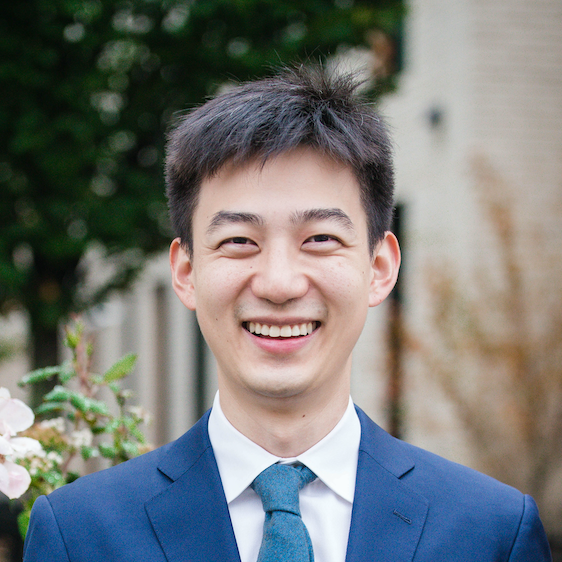
I am an assistant professor in management and strategy with a joint appointment in economics at HKU Business School. I received my PhD from MIT in 2022 and my BA from Harvard University in 2012.
I study labor, organizations, housing, and money. My current projects are on domestic outsourcing, affordable housing, digital money, and the Hong Kong economy.
I am the research director of local policy research think tank Citizen Action Design. I am also a Fellow of the HKU CCCW, an affiliate researcher of the HKU Jockey Club ESG Research Institute, and a member of the HKU Real Estate Lab. My writings have been featured in publications such as SCMP, Ming Pao, HKEJ, and HKET.
Here is my CV, bio, and disclosure statement. You can reach me at mbwong@hku.hk.
Working Papers
(with Naijia Guo and Duoxi Li)
Last Updated: February 2025
Revise and resubmit, Journal of Development Economics
Abstract (click to expand): Domestic outsourcing is known to reduce worker wages, but its effect on employment security---a key dimension of job quality---has not been studied. Using Brazil's comprehensive employee-employer data, we robustly find that outsourcing reduces exit from formal employment among cleaners and security guards during their first few years of tenure. The observed reduction in employment hazard is larger in cities with greater volatility in labor demand. Our findings are not attributable to differences in worker characteristics or changes in local market conditions. To explain the findings, we develop a search-theoretic model in which outsourcing both alters wage setting and eases reassignment across firms. The estimated model suggest that outsourcing had more positive welfare effects on workers upon job entry than implied by wage differentials alone.
(with Mayara Felix)
Last Updated: August 2024
Abstract (click to expand): This paper estimates the wage, employment, and reallocation effects of non-core activity outsourcing using Brazil’s unexpected 1993 court-ordered outsourcing legalization. We leverage North-South variation in pre-legalization court permissiveness and compare security guards to less affected occupations. We find that older incumbent security guards were adversely impacted through occupational layoffs, loss of firm-level wage premia, and exit from the occupation. At the same time, increased numbers of younger workers entered the formal sector and became employed at contract firms. On net, legalization increased guard employment by 5%, led by a 50% increase in employment for guards aged 18-24, and had no effect on demographically-adjusted guard wages. The observed labor reallocation effects are explained by the fact that contract firms persistently employ demographically different workers than direct employers.
(with Duoxi Li)
Last Updated: July 2025
Abstract (click to expand): Managers who enforce norms and allocate resources pervade economic exchange. We develop repeated-game models to explain when and why managers emerge in relational contracting environments. In our models, managers mitigate a fundamental tension between incentive provision and flexible allocations, but require incentive rents, leading to endogenous sorting into organizational arrangements. Agents choose managerial coordination over decentralized exchange when their idiosyncratic demand is volatile and specialized services are needed. Managerial coordination also increases as communication frictions decline. The models provide novel microfoundations for the structure, boundaries, and distributional impacts of organizations such as professional service firms, global sourcing firms, and online platforms.
Last Updated: June 2025
Abstract (click to expand): Using unique transaction-level data from digital currency experiments in a Toronto used-goods barter economy, this paper tests core predictions of search-theoretic monetary models. Three unexpected monetary events are used to measure causal effects. Results show that (1) a large increase in token issuance persistently increased trade; (2) a partial halt in token redemption triggered a run and persistently reduced token acceptance and trade; and (3) a complete halt in token redemption further reduced token acceptance and trade, while leaving token prices unchanged. These findings are consistent with a model of redeemable money with price rigidity. The evidence highlights how redemption-run dynamics and community enforcement of redemption promises shape the viability of currency systems.
(with Baiyun Jing, Yang You, and Yulin Zhong)
Last Updated: March 2025
Abstract (click to expand): Many currencies are backed by promises of redemption---including stablecoins, pegged currencies, bank deposits, and asset-backed securities---but it is unclear why redemption is important when redemption volumes are often low. We show in a search-theoretic model of money that redeemability can coordinate agents on a monetary equilibrium despite zero steady-state redemption volume. However, either mispricing of the redemption good or a lack of confidence can trigger a run. Moreover, with heterogeneity in agent preferences, redeemability may become both costly and necessary for money circulation. We test the predictions of our model using unique transaction-level data from a real-world used-goods trading platform, as well as novel cross-sectional and time-series variation in redeemability. The evidence leads to new insights regarding the benefits, costs, risks, and optimal design of currency redemption.
Last Updated: July 2025
Abstract (click to expand): Subsidized rental housing is known to benefit recipients less than subsidized homeownership, yet regular income tests are crucial for maximizing targeting efficiency. This paper assesses the importance of these tests using a unique housing reform in Hong Kong, which allowed 183,700 public housing tenants to avoid regular income tests by purchasing permanent occupancy rights. Leveraging the reform's incomplete roll-out between 1998 and 2006, I estimate that it increased average household incomes by 23% over 15 years, reduced average household sizes, and persistently altered household demographic composition in treated estates. These impacts are consistent with incumbent families strategically altering co-residence choices to obtain additional public housing units. Consequently, the reform undermined targeting efficiency and increased wait times for low-income households. Back-of-the-envelope calculations suggest it significantly contributed to the proliferation of tiny subdivided private-sector units.
Publications
(with Matthew Gentzkow and Allen T. Zhang)
American Economic Journal: Microeconomics, 2025
Abstract (click to expand): We study the role of endogenous trust in amplifying ideological bias. Agents in our model learn a sequence of states from sources whose accuracy is ex ante uncertain. Agents learn these accuracies by comparing their own reasoning about the states based on introspection or direct experience to the sources' reports. Small biases in this reasoning can cause large ideological differences in the agents' trust in information sources and their beliefs about the states, and may lead agents to become overconfident in their own reasoning. Disagreements can be similar in magnitude whether agents see only ideologically aligned sources or diverse sources.
Work in Progress
The Price Effect(s) of Rent Control: An Assignment Model Approach
(with Jimmy Ho, Yulin Hong, and Zhongji Wei)
The Welfare Cost of Public Housing Misallocation in Hong Kong
(with Jimmy Ho, Yulin Hong, and Zhongji Wei)
Housing Prices and Expenditures: A Cautionary Tale
(with Jimmy Ho, Yulin Hong, and Zhongji Wei)
Policy Writing
How Hong Kong can reimagine its greatest asset: people’s homes (South China Morning Post, 2025-4-5, with Alex Ngau)
Anatomy of a Housing Affordability Crisis: Hong Kong, 2001-2021
(Hong Kong Economic Policy Green Paper, 2025-1-9, with Jimmy Ho and Yulin Hong)
Hong Kong’s economic recovery hinges on having enough adequate housing (South China Morning Post, 2024-8-9)
Hong Kong must stop letting the well-off hog public rental housing (South China Morning Post, 2024-5-4, with Jimmy Ho)
Why is Hong Kong Housing So Expensive? (HKU FOSS presentation, 2024-3-6)
The Solution to Hong Kong’s Subdivided Housing Crisis
(Translated from Hong Kong Economic Journal, 2024-2-14)
Brain Drain, Brain Gain, and The Future of Hong Kong: Evidence from LinkedIn Profiles
(Hong Kong Economic Policy Green Paper, 2024-1-10, with Alan P. Kwan and Heiwai Tang)
Using Data and Algorithms to Reduce Public Housing Wait Times
(Hong Kong Economic Policy Green Paper, 2024-1-10, with Shing-Yi Wang and Maisy Wong)
What Caused Hong Kong’s Housing Crisis?
(Hong Kong Economic Policy Green Paper, 2022-9-23, Twitter thread)
In Hong Kong’s Olympic glory, a glimpse of a hopeful new future (South China Morning Post, 2021-8-4)
Liberal or conservative, Hongkongers must learn to listen to those they disagree with (South China Morning Post, 2019-9-7, with Spike Lee and Josephine Au)
中文文章
居屋嚴重短缺扭曲社會發展 需大幅擴建 (明報, 2025-6-27, 與牛致行和宋恩榮)
現金津貼試行計劃退場 是明智決定——從經濟學理論看補貼轉型的必要性 (明報, 2025-6-5, 與牛致行和宋恩榮)
財赤之出路:賣公屋 救香港! (明報, 2025-4-24, 與牛致行和宋恩榮)
公屋富戶政策改革 是改善民生一大步 (明報, 2025-3-28, 與牛致行和宋恩榮)
香港經濟面臨長期衰退 房策須全面改革(下) (明報, 2025-3-21, 與牛致行和宋恩榮)
香港經濟面臨長期衰退 房策須全面改革(上) (明報, 2025-2-20, 與牛致行和宋恩榮)
剖析香港住房危機:演變與對策 (香港經濟政策綠皮書, 2025-1-9, 與何漢樑和洪雨林)
富戶租金嚴重過低 必須調整 (明報, 2024-12-6, 與何漢樑和牛致行)
要告別劏房 絕不能規管起始租金 (明報, 2024-11-7, 與宋恩榮)
住房短缺礙引才 政府應續增建屋 (明報, 2024-8-14)
加強富戶審查 劏房戶免受苦? (明報, 2024-5-16, 與何漢樑)
香港劏房問題之出路 (香港信報, 2024-2-14)
人才得失與香港前景:領英社交資料佐證 (香港經濟政策綠皮書, 2024-1-10, 與關穎倫和鄧希煒)
利用數據和算法減低公屋輪候時間 (香港經濟政策綠皮書, 2024-1-10, 與王欣儀和黃美施)
香港房屋危機之謎 (香港經濟政策綠皮書, 2022-9-23)
預算案500億推創科 怎用得其所 (香港經濟日報, 2018-3-18)
社會面對新挑戰 須3方面調整 (香港經濟日報, 2017-9-13)
Teaching
Current: Instructor for HKU’s PMGM7004 (Global Management from Economics Perspectives, 2022-) and PMGM7019 (Economics of Strategy and Organization, 2022-).
Previous: TA for MIT’s Intro Micro (undergrad, 2022), Intermediate Micro (undergrad, 2018-20), Applied Econ for Managers (EMBA, 2019), Org Econ (PhD, 2018), and Industrial Organization II (PhD, 2022).
Notes
Things I learned in Grad School (the Hard Way)
Tips for excelling as a PhD student
Lab
I’m hiring a research associate for JC PROJECT LIFT. Please apply!
I’m also recruiting graduate students at HKU. My current projects are to:
- Measure the impact of housing policy on inequality and welfare;
- Study money and barter in the field.
- Develop models of relational contracting networks, markets, and hierarchies;
Email me if you are interested. Please include a CV and a concise description of your relevant experience and interests.